
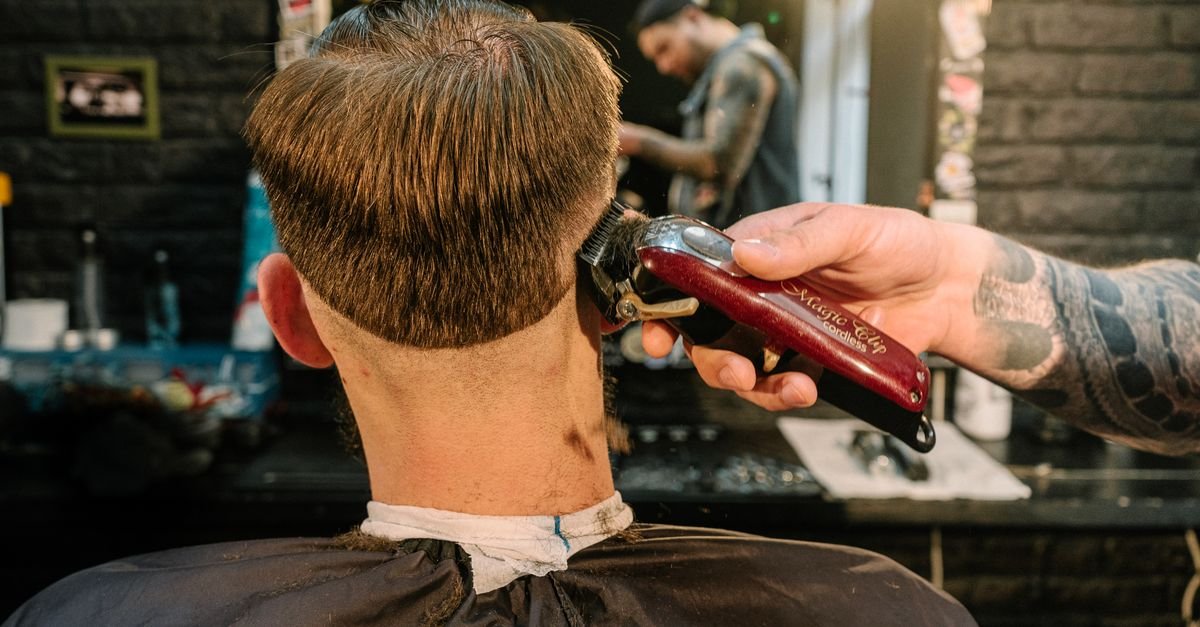
Whether you’re stepping into a barber’s chair for the first time or fine‑tuning a signature look, the taper fade remains one of the most versatile haircuts in modern grooming. It blends clean lines with a gradual fade that can be tailored to any hair type, face shape, or personal style.
This guide walks you through every angle of the taper fade its definition, the faces it flatters, the tools you’ll need, and even the price you should expect so you can make an informed decision and walk out looking your best.
What Is a Taper Fade and How Does It Differ From Other Haircuts?

A taper fade is a haircut where the hair length gradually reduces from a longer top to a very short, almost skin‑level finish at the neckline and sideburns. The key distinction is the “taper” the smooth transition that starts higher up the head and blends down, unlike a traditional “fade” that may begin at the ear or lower. This subtle gradient creates a clean, polished silhouette while preserving enough length on top for styling.
Core elements that define a taper fade
- Gradual reduction in length from top to side and back.
- Clean, defined edges around the hairline.
- Flexibility to pair with various top styles crew cuts, pompadours, curls, or textured crops.
Because the taper can be adjusted to start anywhere from the temple to the crown, barbers can customize the look for a high‑fade, mid‑fade, or low‑fade effect. This adaptability sets the taper fade apart from blunt cuts or simple buzz cuts, which lack the nuanced gradient.
Which Face Shapes Benefit Most From a Taper Fade?

Choosing a haircut that balances your facial proportions is essential, and the taper fade offers several advantages across different face shapes. The gradual fade can add height, create the illusion of a narrower jawline, or soften strong angles, depending on how it’s executed.
Round faces
For round faces, a higher taper that starts near the temples adds vertical length, making the face appear longer. Pairing the fade with a textured top adds dimension and breaks up the roundness.
Square faces
Square jawlines benefit from a low‑to‑mid taper that softens the angular chin. A slightly longer top with side‑swept volume draws the eye upward, balancing the strong lower half.
Oblong or rectangular faces
A mid‑fade that starts around the ear can shorten the perceived length of an oblong face. Adding width through a fuller top or side‑part creates proportion.
Heart‑shaped faces
Since heart‑shaped faces are wider at the forehead, a taper that begins lower helps maintain the natural balance while keeping the forehead from looking overly dominant.
In every case, the barber’s skill in blending the fade and adjusting the top length determines the final visual impact.
How Can I Choose the Right Taper Fade Length for My Lifestyle?

The taper fade isn’t just about aesthetics; it also needs to fit your daily routine, maintenance preferences, and activity level. Below are three lifestyle categories and the taper fade lengths that typically work best.
Active or athletic individuals
- Low or mid fade: Keeps hair short enough to stay out of the eyes during workouts.
- Short top (1–2 inches): Reduces the need for frequent styling products.
These choices minimize sweat‑related mess while still offering a polished look.
Creative professionals or trend‑setters
- Mid or high fade: Allows for a dramatic contrast between the top and sides.
- Longer top (3–4 inches): Provides canvas for pompadours, curls, or textured looks.
Here, the focus is on visual impact and versatility rather than low‑maintenance.
Corporate or formal environments
- Low fade with a neat side part: Conveys professionalism while retaining a modern edge.
- Medium top (2–3 inches): Easy to comb and keep tidy with light hold product.
This balance ensures you look sharp without drawing excessive attention.
Ultimately, the ideal taper fade length is a compromise between personal style and practical considerations.
What Are the Step‑by‑Step Instructions for Getting a Taper Fade at Home?

While a professional barber delivers the most precise result, many enthusiasts prefer a DIY approach to save time and money. Follow these detailed steps to achieve a respectable taper fade on your own.
Step 1: Gather the right tools
- Adjustable clipper set with guard sizes ranging from #0 to #4.
- Sharp scissor shears for blending the top.
- Comb (wide‑tooth and fine‑tooth).
- Mirror (preferably a three‑way wall mirror).
- Styling product (light pomade or matte cream).
Step 2: Prepare the hair
Wash and towel‑dry the hair to remove excess oil. Slightly damp hair cuts more evenly and reduces the risk of uneven sections.
Step 3: Define the fade line
Using a #2 guard, start at the base of the neck and move upward, stopping where you want the fade to transition (usually just below the ear for a low fade, or halfway up for a mid fade). This line serves as your guide for blending.
Step 4: Blend the sides
Switch to a #1 guard and work from the fade line upward, using a rocking motion to avoid harsh lines. For an even smoother transition, finish with a #0 guard at the very bottom, taking care not to create a bald spot.
Step 5: Trim the top
Using scissors or a longer guard (e.g., #4), cut the top to your desired length. Blend the top into the sides by lightly scissoring the outer edges.
Step 6: Clean up the edges
Remove the guard and use the bare clippers to outline the neckline, sideburns, and around the ears for a crisp finish.
Step 7: Style and evaluate
Apply a small amount of product, style as desired, and check for any uneven spots. Make minor adjustments with the clippers or scissors as needed.
Practicing these steps a few times will improve both speed and accuracy, bringing your home‑cut results closer to a professional finish.
Which Tools and Products Produce the Best Taper Fade Results?

The quality of your equipment directly influences the smoothness of the fade and the health of your hair. Below is a curated list of tools and products favored by barbers and DIY enthusiasts alike.
Top-rated clippers
- Wahl Professional 5-Star Series: Powerful motor, durable steel blades, and a wide range of guard sizes.
- Andis Master Cordless: Lightweight, ergonomic design, ideal for precision work.
- Oster Classic 76: Heavy‑duty option for thick or coarse hair.
Best scissors and shears
- Utopia Professional Shears – Japanese steel, razor‑sharp edge.
- Jaguar Professional Shears – Balanced weight for smooth cutting.
Essential grooming products
- Pre‑cut scalp cleanser: Removes buildup that can clog clippers.
- Light‑hold pomade: Keeps texture without weighing hair down.
- Matte styling cream: Ideal for a natural, low‑shine finish.
Investing in these tools may seem costly upfront, but they extend the lifespan of your haircut and reduce the need for frequent salon visits.
How Much Should a Professional Taper Fade Cost and What Should I Expect?
Pricing for a taper fade varies based on geographic location, barber expertise, and salon ambiance. Below is a comparative table that outlines typical price ranges across three common market segments.
| Salon Type | Average Price (USD) | Typical Wait Time | Additional Services Included |
|---|---|---|---|
| Budget Barbershop | $15‑$25 | Same‑day appointment | Basic wash, basic styling |
| Mid‑range Salon | $30‑$50 | 1‑2 weeks | Wash, scalp massage, product recommendation |
| Luxury Grooming Lounge | $70‑$120 | 2‑4 weeks | Premium wash, hot towel treatment, personalized styling consultation |
Beyond price, expect a consultation where the barber assesses your hair type, face shape, and lifestyle before deciding on fade height and top length. A quality taper fade should leave you with a seamless gradient, crisp edges, and a style that feels comfortable throughout the day.
Quick Taper Fade Facts
- The taper fade originated in the 1980s hip‑hop scene before becoming mainstream in the 2000s.
- Unlike a traditional fade, the taper begins higher on the head, allowing for more top length.
- A well‑executed taper fade can make a head appear up to 0.5 inches taller.
- Most barbers recommend trimming the fade every 3‑4 weeks to maintain sharpness.
- Using a spray bottle to dampen hair during a DIY fade reduces blade friction and improves accuracy.
Frequently Asked Questions
Can I get a taper fade with curly hair?
Yes. Barbers typically use longer guard sizes on the sides to preserve curl pattern while still achieving a gradual fade. A curl‑specific moisturizer helps maintain definition.
How long does a professional taper fade appointment usually take?
From consultation to final styling, most appointments last between 30 and 45 minutes, depending on complexity and desired top length.
Is a taper fade suitable for men with thinning hair?
Absolutely. The fade can disguise thinning areas by creating a uniform gradient, while a slightly longer top adds the illusion of volume.
Do I need special hair products for a taper fade?
A light‑hold product is sufficient for most styles. Over‑styling with heavy gels can weigh down the hair and diminish the clean look of the fade.
Can women wear a taper fade?
Women increasingly choose taper fades for a bold, gender‑neutral aesthetic. The same principles apply—adjust the fade height and top length to suit personal style.
Will a taper fade damage my hair?
When performed correctly, a taper fade does not cause damage. Regular scalp care and avoiding overly tight clippers help keep hair healthy.
Wrapping Up the Taper Fade Journey
The taper fade remains a timeless yet adaptable haircut that caters to a broad spectrum of hair types, face shapes, and lifestyle needs. By understanding its fundamentals, selecting the right length, mastering basic DIY techniques, and knowing what to expect from a professional visit, you can confidently sport a fade that looks sharp and feels personal.
Whether you opt for a low, mid, or high taper, the key is consistency regular trims, proper product use, and occasional consultations will keep the gradient crisp for months to come. Embrace the versatility of the taper fade and let it become the cornerstone of your grooming routine.

Hi, I’m Emily Carter, the mind and heart behind CaptionMood — a creative space designed to help you express your thoughts with the perfect words.
As a writer and digital content enthusiast, I’ve always believed that captions are more than just text; they’re emotions, stories, and reflections of who we are. With CaptionMood, my mission is to provide unique and engaging Mood Captions, Occasion Captions, and Social Media Captions that resonate with people from all walks of life.
Thank you for visiting and being part of this journey. Through CaptionMood, I hope to inspire, connect, and make every post more meaningful.